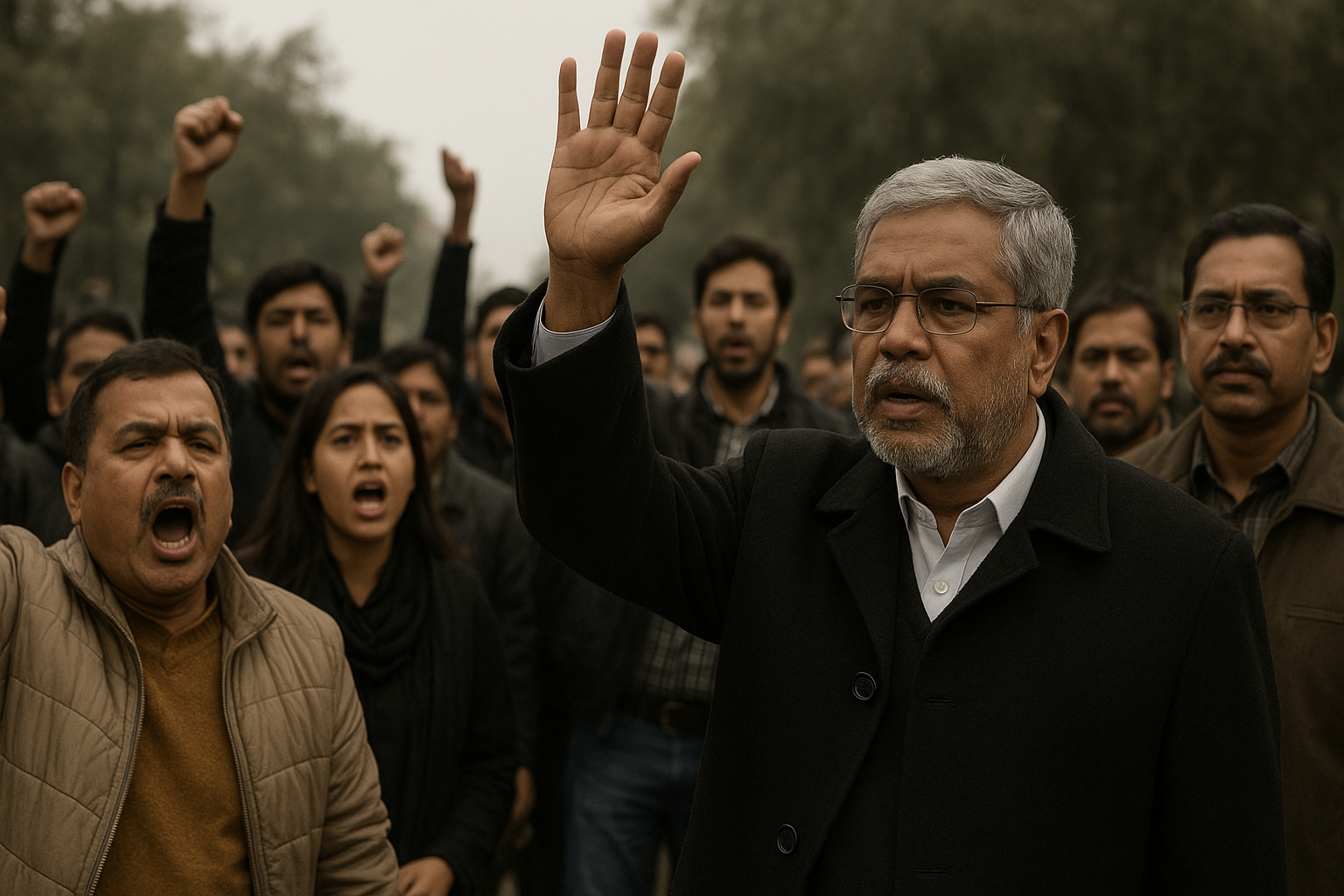
A Major Shift in National Leadership
In a surprising turn of events that has captured the nation’s attention, the political landscape witnessed a significant tremor this evening. During a hastily arranged joint press conference featuring government representatives and protest leaders, critical announcements were made regarding the future of the nation’s educational administration. The high-stakes negotiations culminated in a breakthrough that many political analysts consider a monumental victory for the agitating factions.
The catalyst for this sudden political shift was the official departure of the high-ranking official overseeing the education portfolio. His exit marks a pivotal moment in an ongoing saga that has paralyzed parts of the administrative machinery for weeks. Demonstrators had camped out, voicing grievances over policy directions and demanding accountability at the highest levels of governance.
Understanding the Core Grievances
For weeks, the coalition of protesters—operating under the banner of the CJP—had maintained a relentless stance. Their primary grievance centered on systemic issues within the educational framework, which they argued stifled opportunities and marginalized critical voices. The demand for the resignation of the Union Education Minister was not merely a symbolic gesture; it was framed as an absolute prerequisite for any meaningful dialogue with the ruling administration.
As pressure mounted from various sectors of society, the government found itself in an increasingly untenable position. Public sympathy largely leaned toward the demonstrators, especially as student unions and academic bodies joined the chorus of dissent. The administration realized that maintaining the status quo was no longer a viable option if stability and public trust were to be restored.
The Turning Point and Compromise
The breakthrough arrived after hours of intense, behind-the-scenes bargaining between senior cabinet ministers and delegates representing the protest movement. Sources close to the negotiation table reported a tense atmosphere, with both sides refusing to budge on key ideological points. However, the realization of the broader economic and social costs of prolonged unrest eventually forced a compromise.
In addition to the ministerial resignation, several secondary demands put forth by the coalition were accepted in principle. These concessions include a comprehensive review of current academic policies, increased transparency in administrative appointments, and assurances that no punitive actions will be taken against individuals who participated in the demonstrations. This comprehensive package paved the way for an immediate de-escalation of tensions.
Public and Political Reactions
Reactions to the evening’s announcements have been swift and varied. Opposition parties have claimed moral vindication, arguing that the government bowed only under extreme pressure and public scrutiny. Meanwhile, supporters of the ruling administration have praised the leadership for displaying pragmatism and a willingness to listen to the citizenry, framing the compromise as a triumph of democratic engagement.
Educational institutions across the country have expressed cautious optimism. Many deans and student representatives hope that the departure of the contentious minister will usher in an era of collaborative policy-making. However, skepticism remains regarding how swiftly the promised reforms will be implemented on the ground.
Conclusion
The events of this evening mark a watershed moment in contemporary national politics. By addressing the core grievances of the protest movement and facilitating the resignation of the Union Education Minister, the administration has averted a prolonged crisis. Yet, the true test lies ahead in the execution of the promised reforms and the restoration of absolute confidence in the nation’s educational apparatus.
Frequently Asked Questions
Why did the Union Education Minister resign?
The minister stepped down following weeks of intense protests led by the CJP, who made his departure a non-negotiable core demand for ending their demonstrations.
What other demands were met during the negotiations?
Alongside the ministerial resignation, the government agreed to review current educational policies, increase administrative transparency, and grant amnesty to protest participants.
What happens next following the end of the protests?
With the protests officially called off, attention now shifts to the implementation of agreed-upon reforms and the appointment of a new education minister.
