Understanding the Monsoon Crisis in Gujarat
Torrential monsoon downpours have unleashed severe flooding across multiple districts in the western Indian state of Gujarat, prompting massive emergency response operations. Continuous rainfall that began midweek has paralyzed daily routines, inundated low-lying neighborhoods, and overwhelmed local municipal infrastructure. Emergency services, alongside disaster response forces, have been working around the clock to secure vulnerable populations as water levels continue to rise dangerously in several river basins.
Meteorological departments reported unprecedented precipitation rates in southern and central regions of the state. The sudden deluge caught many communities off guard, transforming streets into rushing waterways and cutting off vital road links. Local administrations have activated emergency control rooms to coordinate relief efforts and monitor the situation continuously as forecasts predict further precipitation in the coming days.
Hardest Hit Districts and Regional Impact
Among the hardest-hit areas, Navsari and Valsad bore the brunt of the relentless weather system. Swollen rivers breached their banks, spilling muddy waters into residential zones and agricultural lands alike. Following closely behind, Surat, Ahmedabad, Kheda, Tapi, and the hilly terrain of Dangs experienced severe disruptions. Urban centers saw major thoroughfares submerged under feet of water, trapping motorists and stalling public transit networks completely.
In Ahmedabad, the state’s commercial hub, heavy waterlogging led to massive traffic gridlocks and power outages in several neighborhoods. Municipal workers deployed heavy-duty pumps to clear flooded underpasses, while schools and colleges remained shuttered for safety. Rural areas faced an equally grim reality, with vast tracts of farmland submerged, threatening standing crops and causing significant distress to the farming community.
Mass Evacuations and Heroic Rescue Operations
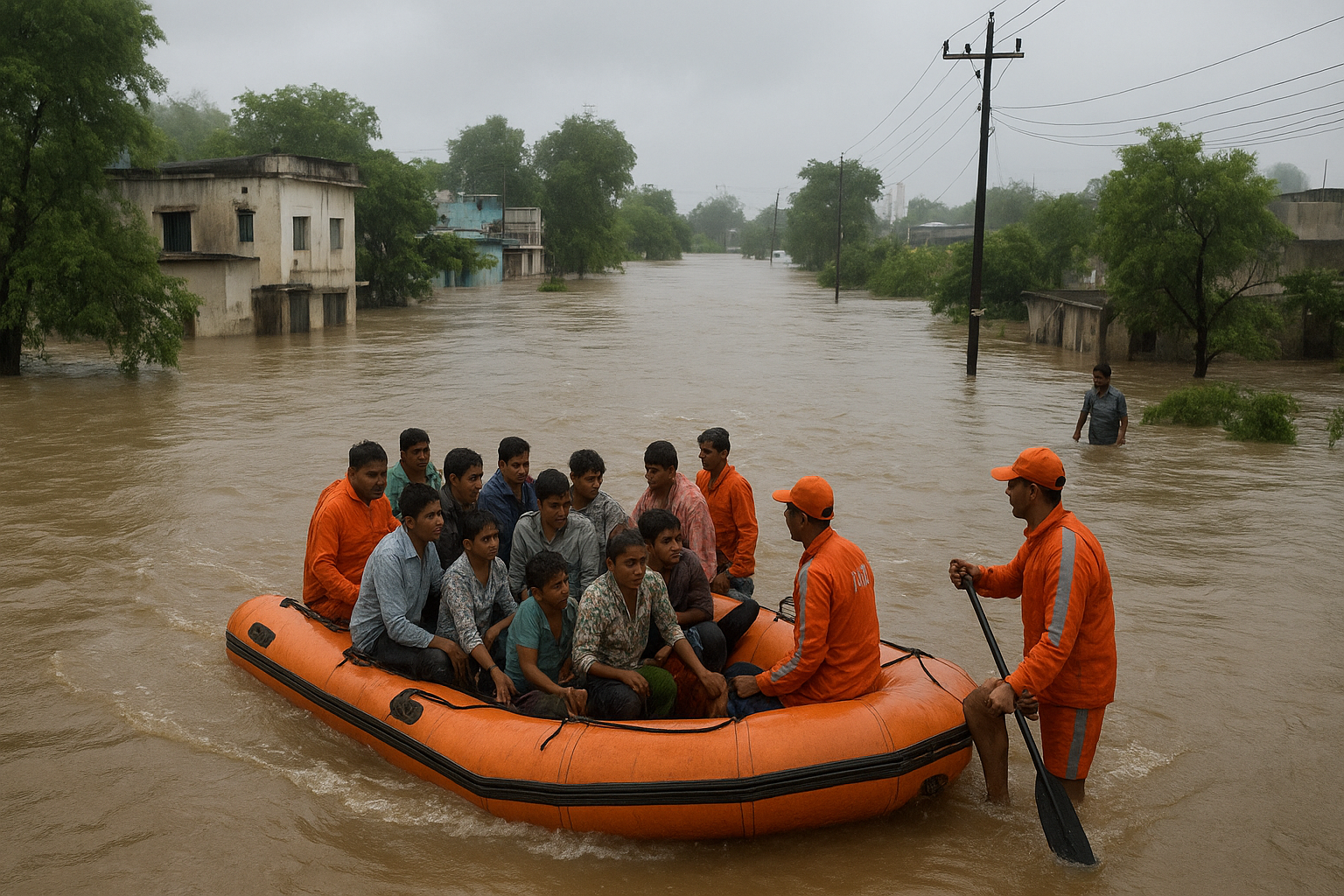
Faced with escalating peril, state and national disaster management authorities launched large-scale evacuation protocols. Over twenty-two thousand individuals have been successfully relocated from high-risk zones to safer relief camps established in community centers and schools. These temporary shelters are currently stocked with essential supplies, including clean drinking water, dry rations, and basic medical aid to support the displaced populace.
Deploying Specialized Emergency Teams
Coordinated efforts by the National Disaster Response Force (NDRF), State Disaster Response Force (SDRF), and local police have resulted in the rescue of twelve hundred stranded residents. Armed with rubber boats and life jackets, rescue teams navigated treacherous, debris-filled currents to reach families trapped on rooftops and upper floors of inundated homes.
Helicopters from the defense forces were placed on high alert to execute aerial rescue missions in remote pockets where ground access became entirely impossible. Medical teams have also been deployed to relief camps to prevent any outbreak of waterborne diseases, ensuring that vulnerable groups, including infants and the elderly, receive immediate healthcare attention.
Conclusion
The unfolding humanitarian crisis in Gujarat underscores the escalating vulnerability of densely populated regions to extreme weather events. While the immediate focus remains on securing human life and providing relief to the displaced thousands, long-term infrastructural resilience must be prioritized. As climate patterns become increasingly erratic, bolstering regional disaster preparedness and drainage capabilities will be essential to mitigating future catastrophes of this magnitude.
Frequently Asked Questions
How many people have been relocated due to the floods in Gujarat?
Over 22,000 residents have been successfully relocated from vulnerable, flood-prone areas to safer designated relief camps.
Which districts in Gujarat were the worst affected by the heavy rains?
Navsari and Valsad experienced the most severe impact, followed heavily by Surat, Ahmedabad, Kheda, Tapi, and Dangs.
What measures are being taken to help the stranded residents?
Emergency response teams, including the NDRF and SDRF, have rescued over 1,200 people using boats and aerial support while distributing food, clean water, and medical supplies in relief shelters.
