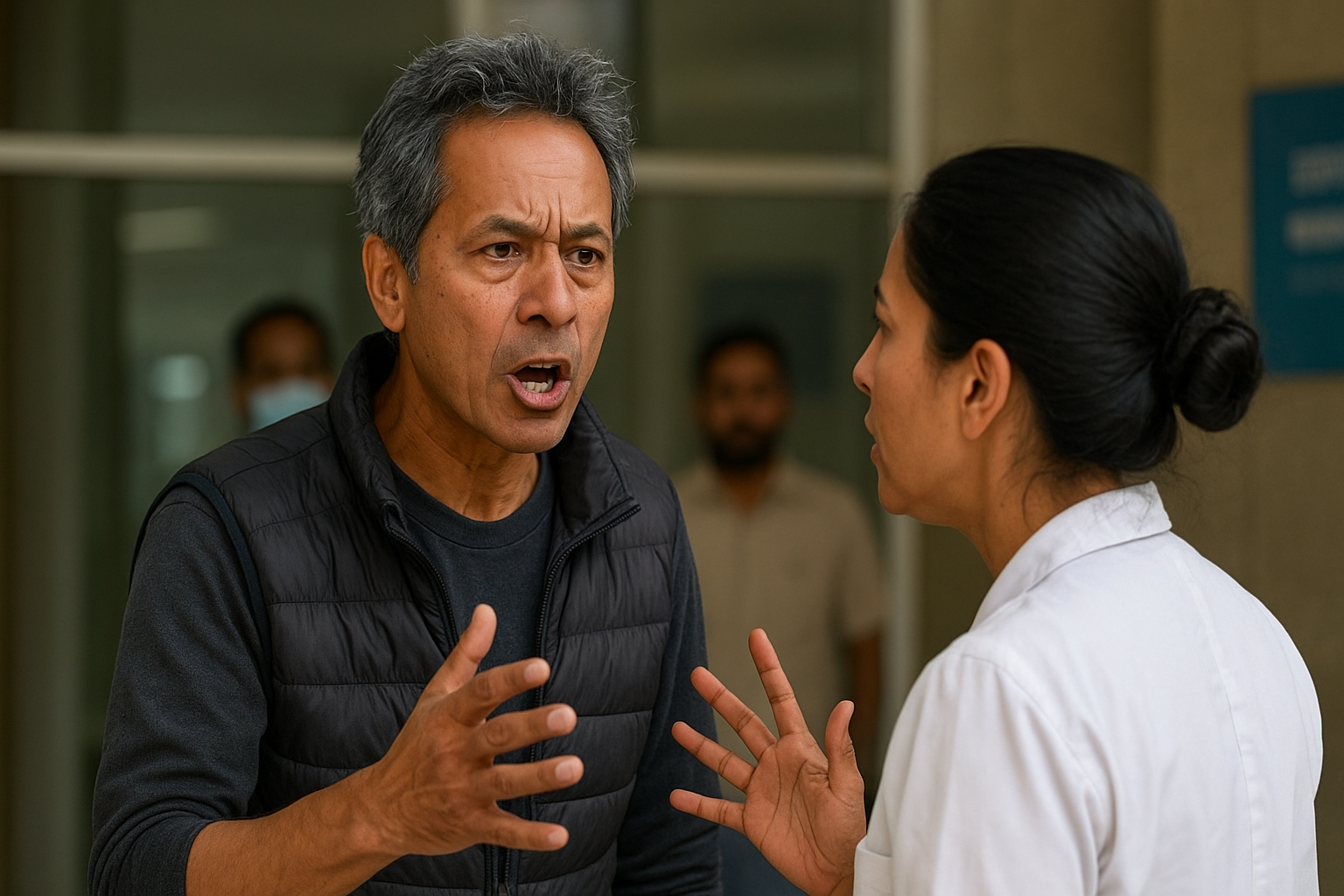
Understanding the Controversy at Safdarjung Hospital
Recent events surrounding prominent innovator and education reformist Sonam Wangchuk have sparked widespread public concern and media scrutiny. Following a legal battle that seemingly secured his permission to relocate for medical care, Wangchuk found himself embroiled in a tense standoff at a prominent public healthcare facility in the capital. Video footage capturing a heated exchange between the activist and hospital authorities quickly went viral, igniting intense discussions regarding civil liberties, administrative protocols, and the enforcement of judicial directives in India.
The incident unfolded when Wangchuk, who had been under observation, attempted to transition to a different medical institution as permitted by a recent ruling from the Delhi High Court. However, the planned departure hit a severe roadblock. According to accounts from the scene, hospital staff and security personnel allegedly barred his exit, leading to hours of delay. Frustrated by what he perceived as an unlawful restriction of his movement, Wangchuk openly challenged the authorities, demanding immediate compliance with the court’s order and even challenging officials to take him into custody if they believed he was breaking any rules.
The Legal Backdrop and Court Intervention
To fully grasp the gravity of the Safdarjung Hospital standoff, one must examine the sequence of events leading up to the confrontation. The Delhi High Court had previously been petitioned regarding Wangchuk’s health status and his custodial or observation conditions. Legal representatives argued vehemently for his right to choose specialized medical care, pointing out that continued stays in certain facilities might not serve his best interests medically or legally.
Judicial Orders Versus Administrative Realities
The judiciary eventually ruled in favor of the petitioner, granting explicit permission for Wangchuk to be shifted to a private healthcare facility renowned for advanced treatments, specifically Medanta. Ideally, a high court directive acts as an immediate mandate, compelling all involved state and institutional actors to facilitate the transition smoothly. Yet, the reality on the ground often involves bureaucratic red tape, delayed paperwork, or miscommunication between legal teams and hospital administration.
In this instance, the hospital authorities maintained that certain discharge protocols and administrative clearances were still pending. They argued that releasing a high-profile individual without completing the formal institutional procedures could lead to legal and administrative liabilities. Conversely, Wangchuk and his supporters viewed these delays not as routine paperwork, but as a deliberate attempt to stall his release and flout judicial authority.
Hospital Authorities Respond to the Allegations
As the video of the confrontation circulated across television news and social media platforms, public pressure mounted on Safdarjung Hospital to clarify its stance. Administrators released statements defending their actions, emphasizing that the institution operates under strict guidelines and standard operating procedures (SOPs) that apply universally to all patients, regardless of their social standing or political visibility.
Clarifying the Delay
According to the hospital administration, the delay in Wangchuk’s departure was entirely administrative rather than malicious. Representatives stated that while they respected the Delhi High Court’s verdict, official paperwork detailing the transfer conditions must be thoroughly processed and verified by the hospital’s legal and medical boards. They insisted that security personnel were merely executing orders to ensure that no patient leaves the premises without the necessary clearance documents, thereby preventing potential legal complications.
Critics, however, remain skeptical of these explanations. Civil rights advocates argue that public institutions should operate with greater agility when a superior court issues a definitive order. They contend that using bureaucratic hurdles to delay compliance sets a dangerous precedent, potentially eroding public trust in both healthcare administration and the judicial system.
Broader Implications for Activism and Civil Rights
The confrontation involving Sonam Wangchuk highlights the fragile intersection of health, activism, and state control. Wangchuk, celebrated globally for his educational initiatives and eco-friendly innovations in Ladakh, has increasingly found himself at odds with governmental authorities over regional autonomy and environmental policies. Consequently, any event involving his detention, movement, or medical care instantly transcends a simple hospital dispute, transforming into a major political talking point.
Observers note that the incident underscores the vulnerability of public figures and activists when dealing with institutional machinery. When legal protections intersect with institutional resistance, the resulting friction often plays out in the public eye, leveraging digital media to demand accountability. The viral nature of the video ensured that millions witnessed the standoff, turning a localized hospital argument into a national conversation about rights, compliance, and institutional overreach.
Conclusion
The standoff involving Sonam Wangchuk at Safdarjung Hospital serves as a stark reminder of the complexities that arise when judicial mandates clash with institutional bureaucracy. While hospital administrators cited necessary procedural protocols to justify the delay, the activist and his supporters viewed the obstruction as a direct violation of a Delhi High Court order. This event not only highlights the ongoing tensions surrounding Wangchuk’s public engagements and legal battles but also raises critical questions about how institutional compliance and civil liberties are managed in India. As discussions continue, the incident remains a potent symbol of the ongoing struggle between administrative caution and the enforcement of individual rights.
Frequently Asked Questions
Why was Sonam Wangchuk at Safdarjung Hospital?
Sonam Wangchuk was receiving medical observation at Safdarjung Hospital following events related to his detention and legal proceedings in the national capital.
What did the Delhi High Court order regarding his transfer?
The Delhi High Court permitted Wangchuk to be shifted to Medanta hospital for specialized medical care, a directive that his legal team expected to be executed without prolonged delays.
Why did the hospital delay his departure despite the court order?
Hospital authorities stated that the delay was due to pending administrative procedures and the necessity of verifying official clearance documents before discharging the patient.
