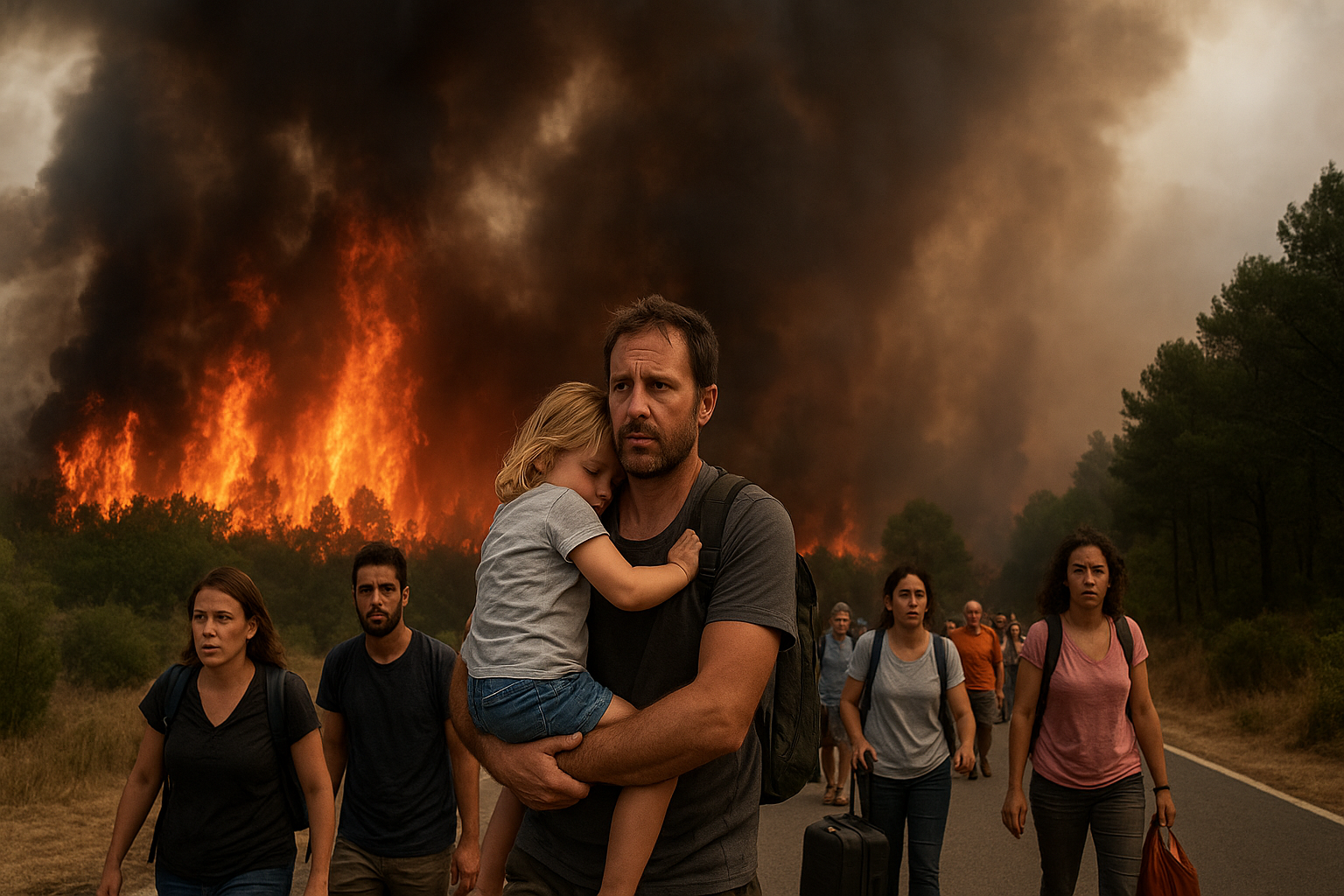
Introduction to the Wildfire Crisis in Europe
Europe has frequently faced severe environmental challenges during the peak summer season, with extreme heatwaves serving as a primary catalyst for devastating natural disasters. Among these, fast-moving forest fires pose an immediate and catastrophic threat to both human settlements and natural ecosystems. The sheer scale of destruction caused by these blazes requires massive coordination among emergency services, local authorities, and international partners to safeguard vulnerable communities.
The Scale of Evacuations in France and Spain
In a massive emergency response, more than 300,000 individuals were forced to abandon their homes and properties as ferocious wildfires swept rapidly across regions of France and Spain. Firefighters and emergency personnel worked tirelessly under extreme weather conditions to contain the advancing flames, which were fueled by prolonged dry spells, high temperatures, and strong gusty winds. Entire neighborhoods, campsites, and rural properties faced imminent danger, prompting swift evacuation orders from civil protection agencies to prevent widespread loss of human life.
Impact on Affected Communities
The sudden displacement of hundreds of thousands of residents and tourists caused immense logistical challenges for local municipalities. Temporary shelters were established in community centers, gymnasiums, and schools to accommodate the influx of evacuees. Local volunteers and humanitarian organizations mobilized quickly to provide food, water, and medical assistance to those who fled with barely any belongings. The psychological toll on affected populations remains profound, as families wait anxiously to hear news about the safety of their homes and livelihoods.
Understanding the Environmental Factors
The intensity and frequency of recent forest fires in Southern Europe are closely linked to broader climatic patterns affecting the region. Extended periods of drought combined with record-breaking summer temperatures create tinderbox conditions in wooded areas. When blazes ignite, either through natural causes or human activity, they can spread at an unprecedented rate, overwhelming local firefighting resources and defying containment efforts.
Emergency Response and Firefighter Efforts
Combating large-scale forest fires requires a multi-faceted approach involving ground crews, specialized firefighting aircraft, and heavy machinery to create firebreaks. Firefighters deployed to the frontlines faced dangerous shifts, navigating thick smoke and shifting wind directions to protect populated areas. Regional governments and national authorities coordinated closely to deploy additional assets, including water-dropping planes and reinforcement personnel from neighboring regions.
Conclusion and Future Outlook
The displacement of over 300,000 people in France and Spain highlights the critical vulnerability of Southern European regions to extreme weather events. As emergency services continue recovery operations and assess the extensive damage, communities are left to rebuild. Addressing the root causes of these recurring environmental crises remains a vital priority for policymakers, environmental scientists, and disaster management organizations moving forward.
Frequently Asked Questions
How many people fled the wildfires in France and Spain?
More than 300,000 people were forced to flee their homes and evacuate due to the wildfires.
Which countries were affected by these massive wildfires?
The wildfires severely impacted regions in France and Spain.
What caused the wildfires to spread so rapidly?
The fires were fueled by extreme weather conditions, including prolonged dry spells, high temperatures, and strong winds.
