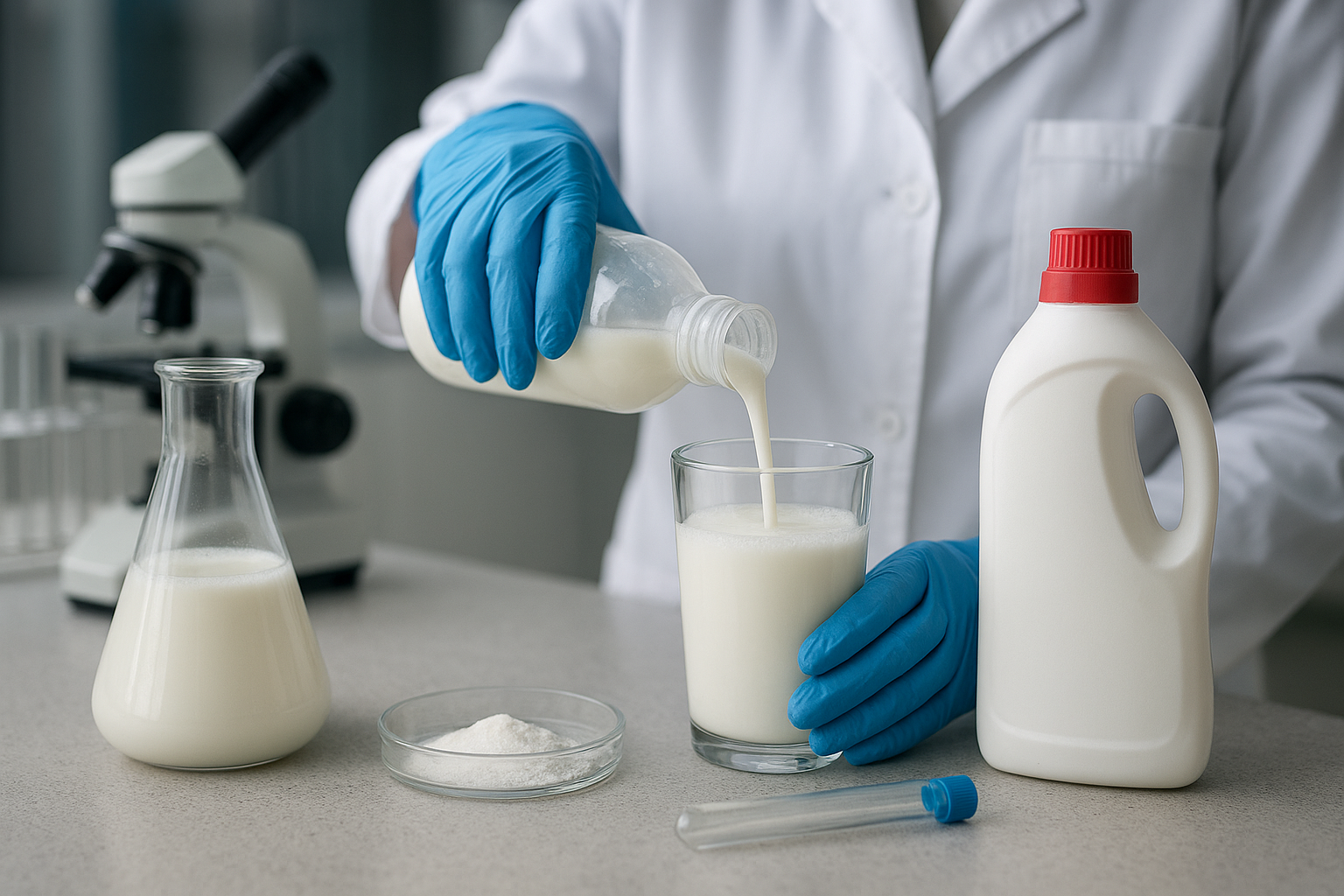
Understanding Milk Adulteration
Milk is a staple nutritional product consumed daily by millions of households, making its purity and safety a matter of utmost public health importance. Unfortunately, the dairy supply chain often faces serious threats from unscrupulous operators who engage in widespread food fraud. Adulterators frequently manufacture synthetic or fake milk by blending ordinary water, urea, and various other cheap chemicals to artificially boost volume and profit margins. However, simply mixing water and basic chemicals alters the natural texture, thickness, and foaming characteristics of genuine dairy. To successfully recreate the rich, creamy appearance and physical properties of real milk, illicit operators resort to adding detergent.
The Role of Detergent in Fake Milk
Why Add Detergent?
Detergent plays a specific role in the formulation of synthetic dairy products. When water and urea are combined, the resulting mixture lacks the opacity and emulsion stability of natural milk. By introducing detergent into the concoction, fraudsters achieve a frothy, soapy emulsion that closely mimics the visual consistency and foaming behavior of authentic milk when shaken or heated. This chemical additive tricks unsuspecting consumers into believing they are purchasing wholesome, nutrient-rich dairy, completely unaware of the toxic substances lurking in their daily beverages.
Health Risks Associated with Synthetic Dairy
The consumption of adulterated milk containing industrial chemicals, urea, and detergents poses severe health hazards to the human body. Regular ingestion of detergent and urea can lead to gastrointestinal complications, kidney damage, liver dysfunction, and long-term systemic health issues. Vulnerable populations, particularly infants, young children, and the elderly, face the highest risk of acute and chronic illness from consuming contaminated dairy products distributed through unregulated channels.
Investigative Journalism and Laboratory Testing
Inside NDTV’s Investigation
To expose the grim reality of food adulteration, media organizations undertake rigorous investigative efforts. NDTV conducted a comprehensive investigation focusing on the quality of dairy products available in the market. As part of this journalistic inquiry, samples were subjected to scientific evaluation at a testing facility located in Maharashtra. Laboratory technicians and food safety experts analyzed the chemical composition of the samples to detect hidden contaminants and fraudulent additives.
Findings from the Maharashtra Testing Lab
The rigorous scientific testing conducted at the Maharashtra testing lab shed light on the alarming extent of dairy contamination. The analysis confirmed the presence of harmful substances, specifically revealing that detergent was being used to manipulate the appearance of milk. This investigative breakthrough provided concrete evidence of the dangerous practices employed by adulterators to deceive consumers and regulatory authorities alike.
Combating Food Fraud in the Dairy Sector
The presence of synthetic agents in essential food items underscores the urgent need for stricter regulatory enforcement, random quality checks, and advanced testing infrastructure across the supply chain. Food safety authorities must enhance surveillance on local dairy distributors and processing units to root out illegal manufacturing practices. Furthermore, public awareness campaigns educating consumers on simple home-testing methods for detecting adulteration can empower communities to protect themselves against fraudulent food practices.
Conclusion
The investigation into dairy adulteration highlights the persistent threat that synthetic and chemically altered food products pose to public health. With laboratories in Maharashtra revealing the use of detergent to mimic real milk, the findings serve as a critical wake-up call for regulatory bodies, industry stakeholders, and consumers. Ensuring a safe and unadulterated milk supply requires continuous vigilance, stringent legal penalties for offenders, and transparent quality control measures across the entire food sector.
Frequently Asked Questions
What ingredients are commonly used to prepare fake milk?
Adulterators often prepare synthetic or fake milk by mixing water, urea and other inexpensive chemicals.
Why is detergent added to synthetic milk?
To recreate the appearance of real milk, they add detergent.
Where was the testing conducted during the investigation?
The testing and investigation involving NDTV took place at a testing lab in Maharashtra.
