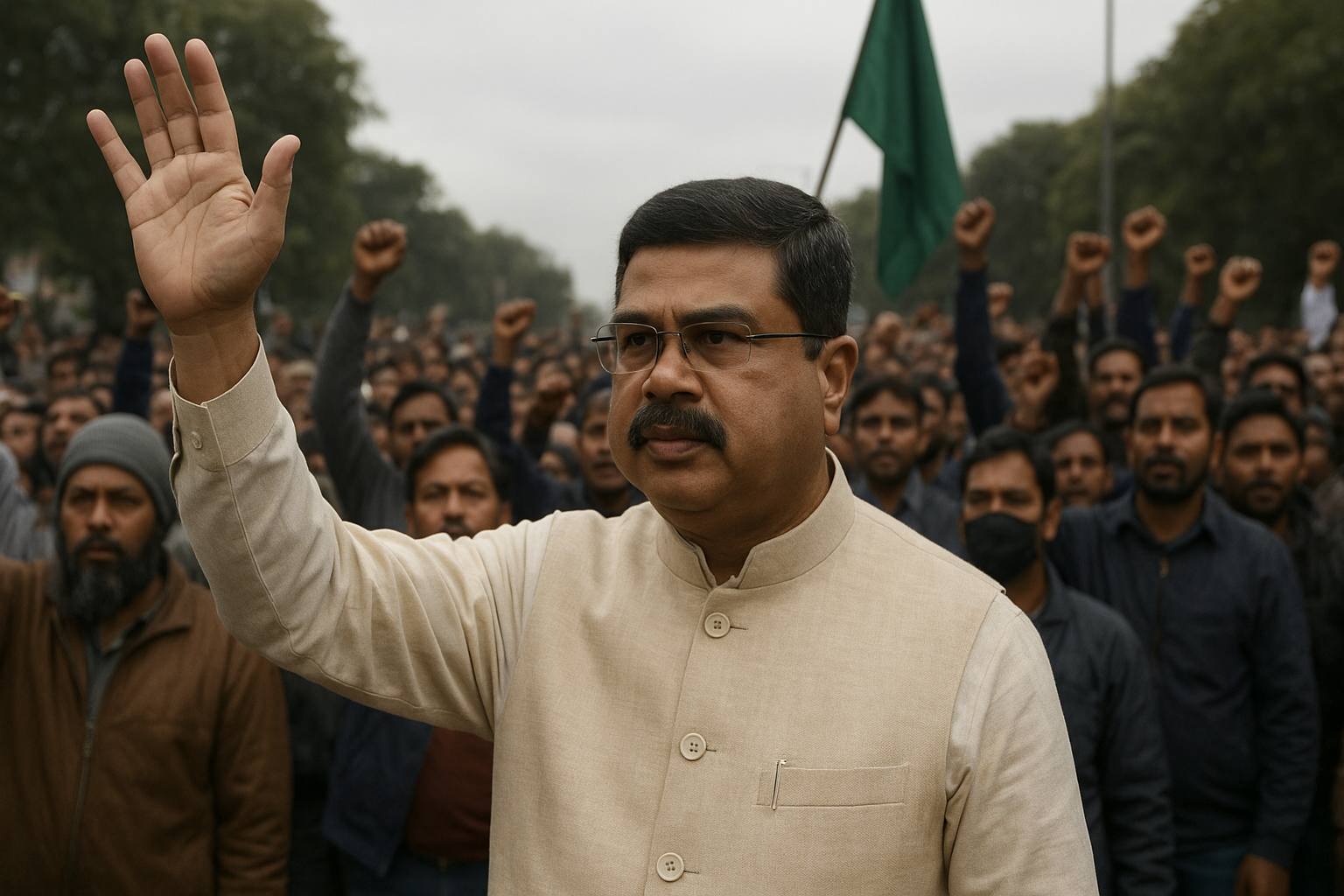
Major Shift in Governance Following High-Profile Resignation
The political landscape experienced a dramatic shift this evening as the central government and protesting student factions jointly announced a breakthrough agreement. The pivotal moment arrived when the Union Education Minister officially submitted his resignation, fulfilling the primary objective of prolonged demonstrations that had gripped the nation. Government officials and leaders of the activist coalition appeared together at a hastily arranged media briefing to outline the terms of the settlement.
For weeks, demonstrators had camped outside key government installations, demanding accountability and structural reforms within the higher education administration. The departure of the senior cabinet official marks a significant turning point in the standoff, easing tensions that had steadily escalated across several major metropolitan areas. Observers note that this high-level exit underscores the administration’s willingness to yield to grassroots pressure when faced with sustained public mobilization.
Addressing Core Grievances and Policy Changes
Beyond the ministerial departure, the joint press conference shed light on several secondary concessions secured by the activist movement. Negotiators worked through the night to finalize a comprehensive memorandum addressing curriculum transparency, standardized testing fairness, and increased funding for public institutions. Representatives from the youth coalition expressed cautious optimism regarding the newly minted agreements, emphasizing that continuous oversight would be maintained to ensure complete implementation.
The policy adjustments encompass a thorough overhaul of the grievance redressal mechanisms available to students and faculty alike. Administrative bodies will now feature independent oversight panels designed to prevent bureaucratic overreach and ensure equitable resource distribution. These structural alterations aim to restore faith in public educational administration and prevent future friction between academic bodies and the governing authority.
Broader Political Implications and Future Outlook
Political analysts suggest that the swift resolution of this crisis could reshape the ruling party’s strategy as upcoming legislative sessions approach. By opting for a high-profile resignation rather than prolonged conflict, the administration appears to favor damage control and stability over obstinacy. However, critics warn that lingering skepticism among youth voters may persist unless the newly appointed leadership demonstrates immediate, tangible improvements in policy execution.
As the academic community begins to return to normalcy, attention shifts toward the identification and appointment of a successor to the vacant cabinet portfolio. Industry leaders and academic veterans have stressed the urgent need for a steady hand at the helm to guide the ministry through ongoing curriculum updates and institutional reforms. The coming weeks will reveal whether the newly negotiated terms will translate into lasting administrative harmony.
Conclusion
The recent developments in the capital highlight the profound impact of organized public dissent on national governance. With the departure of the Union Education Minister and the successful negotiation of core demands, a tense chapter of civic unrest has drawn to a close. While challenges remain in fulfilling every facet of the newly established agreement, the collaborative approach demonstrated by both sides offers a constructive path forward for the nation’s educational framework.
Frequently Asked Questions
What triggered the recent wave of demonstrations?
The protests were primarily driven by widespread dissatisfaction with current educational administrative policies, standardized testing protocols, and a perceived lack of transparency within the ministry.
Who stepped down from their cabinet position?
The Union Education Minister officially resigned from his post, which served as the central demand of the activist coalition throughout the weeks of unrest.
Were all demands made by the movement accepted?
Yes, during the joint press conference, government representatives confirmed that the core demands, alongside several secondary policy adjustments concerning institutional oversight and resource allocation, had been successfully met.
