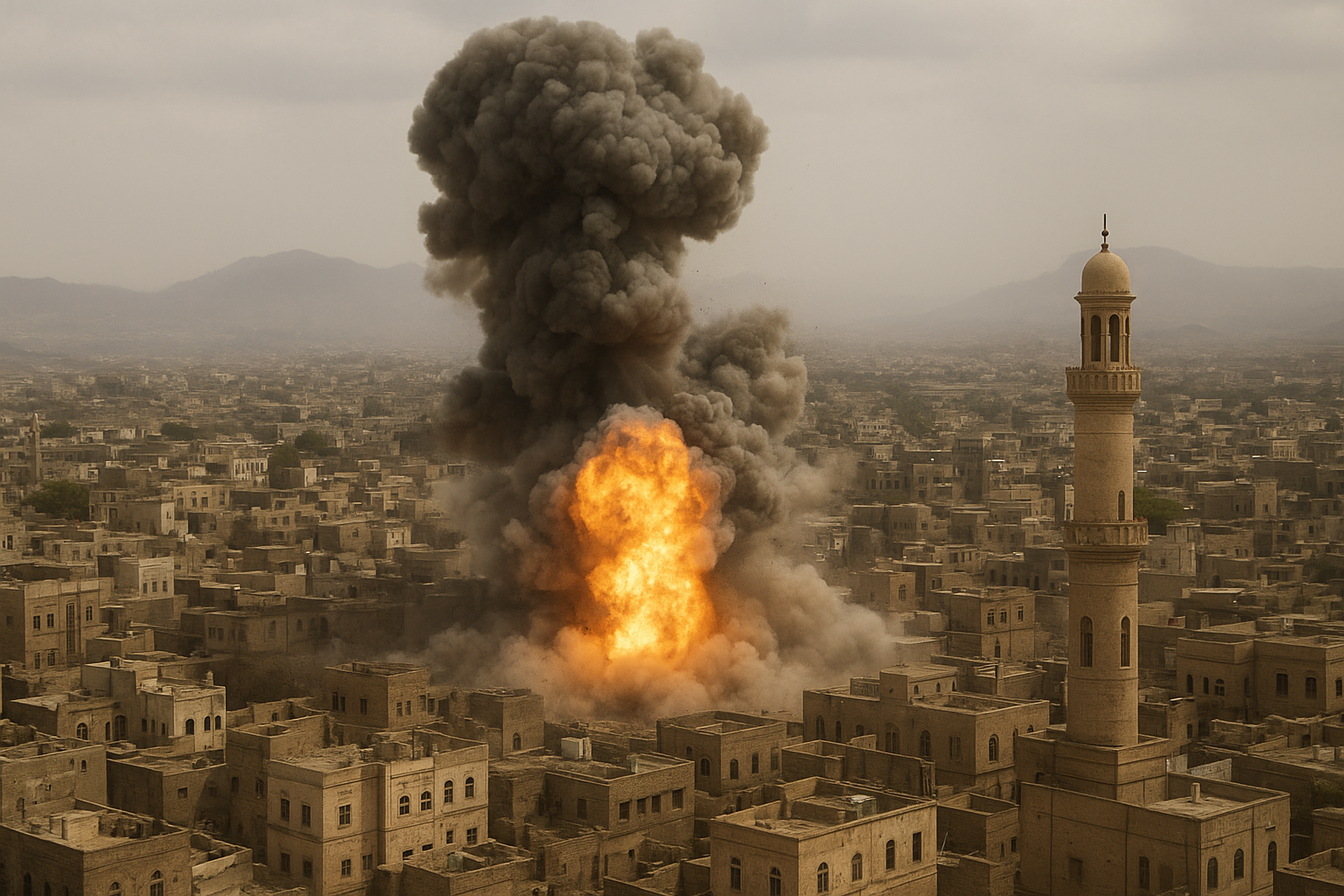
Understanding the Recent Military Escalation in Yemen
The protracted conflict in Yemen has entered another tense phase as military forces launched a series of aerial operations targeting the vital Red Sea governorate of Hodeidah. According to local reports and media outlets operated by the Houthi movement, multiple explosive raids impacted critical infrastructure within the region on Friday. These developments underscore the fragile nature of the security landscape in the region, drawing renewed attention from international observers who are monitoring the humanitarian and strategic implications of ongoing hostilities.
Hodeidah serves as a critical economic lifeline for millions of Yemenis. As the primary port of entry for essential food supplies, medical shipments, and fuel imports, any military activity in and around this coastal hub immediately raises alarms across the global community. The recent aerial bombardments have reignited fears regarding the safety of maritime trade routes in the Red Sea and the uninterrupted flow of humanitarian assistance to populations residing in areas under Houthi administration.
Strategic Importance of the Red Sea Governorate
To fully grasp the significance of these recent events, one must examine the geopolitical and economic weight carried by Hodeidah. Situated on the western coast of Yemen, the governorate provides direct access to vital shipping lanes connecting the Indian Ocean to the Mediterranean Sea via the Suez Canal. Control over this maritime gateway has long been a central objective for various factions involved in the multi-sided civil conflict.
Economic Lifeline and Humanitarian Concerns
Humanitarian organizations have consistently emphasized that any escalation of hostilities in Hodeidah threatens to sever the remaining supply chains keeping the civilian population afloat. Millions of citizens depend entirely on the commodities arriving through the local port facilities. When security conditions deteriorate, shipping companies hesitate to dock, insurance rates skyrocket, and the prices of basic foodstuffs soar beyond the reach of ordinary families.
Regional Security Implications
Beyond domestic survival, the events unfolding along Yemen’s western coast resonate deeply across international borders. Regional powers and global superpowers maintain a keen interest in maintaining stability in the Red Sea corridor. Disruptions to commercial navigation through this narrow maritime bottleneck not only impact Middle Eastern economies but also ripple through global supply chains, affecting energy markets and international trade networks.
Pathways Toward Sustainable Peace
Despite repeated rounds of diplomatic engagement and temporary ceasefires, achieving a comprehensive political settlement in Yemen remains an elusive goal. The fundamental grievances dividing the warring parties require patient, inclusive negotiations rather than military solutions. Analysts suggest that sustainable peace can only be built when all domestic stakeholders, alongside regional and international mediators, commit to addressing the root causes of the conflict.
International bodies continue to urge maximum restraint from all participants. Protecting critical civilian infrastructure from collateral damage is paramount to preventing a deeper humanitarian catastrophe. As diplomatic channels remain open, the international community watches closely to see whether these latest military maneuvers will derail fragile peace talks or prompt a renewed push for a permanent ceasefire.
Conclusion
The recent military strikes targeting Hodeidah highlight the persistent volatility defining the Yemeni conflict. As the region navigates this latest chapter of unrest, the imperative for prioritized humanitarian protection and sustained diplomatic dialogue has never been more urgent. Safeguarding vital maritime corridors and ensuring the unhindered delivery of life-saving aid remain essential steps toward securing a stable and prosperous future for the people of Yemen.
Frequently Asked Questions
Why is Hodeidah so important in the Yemen conflict?
Hodeidah houses the primary Red Sea port through which the vast majority of Yemen’s food, fuel, and medical supplies enter the country, making it a crucial economic and humanitarian hub.
Who reported the recent military strikes?
The strikes were reported by Houthi-run Al Masirah TV, alongside local eyewitnesses who observed aerial attacks near the port facilities.
What are the broader international implications of these events?
Instability in Hodeidah threatens critical Red Sea shipping lanes, potentially disrupting global trade, energy supplies, and maritime security.
