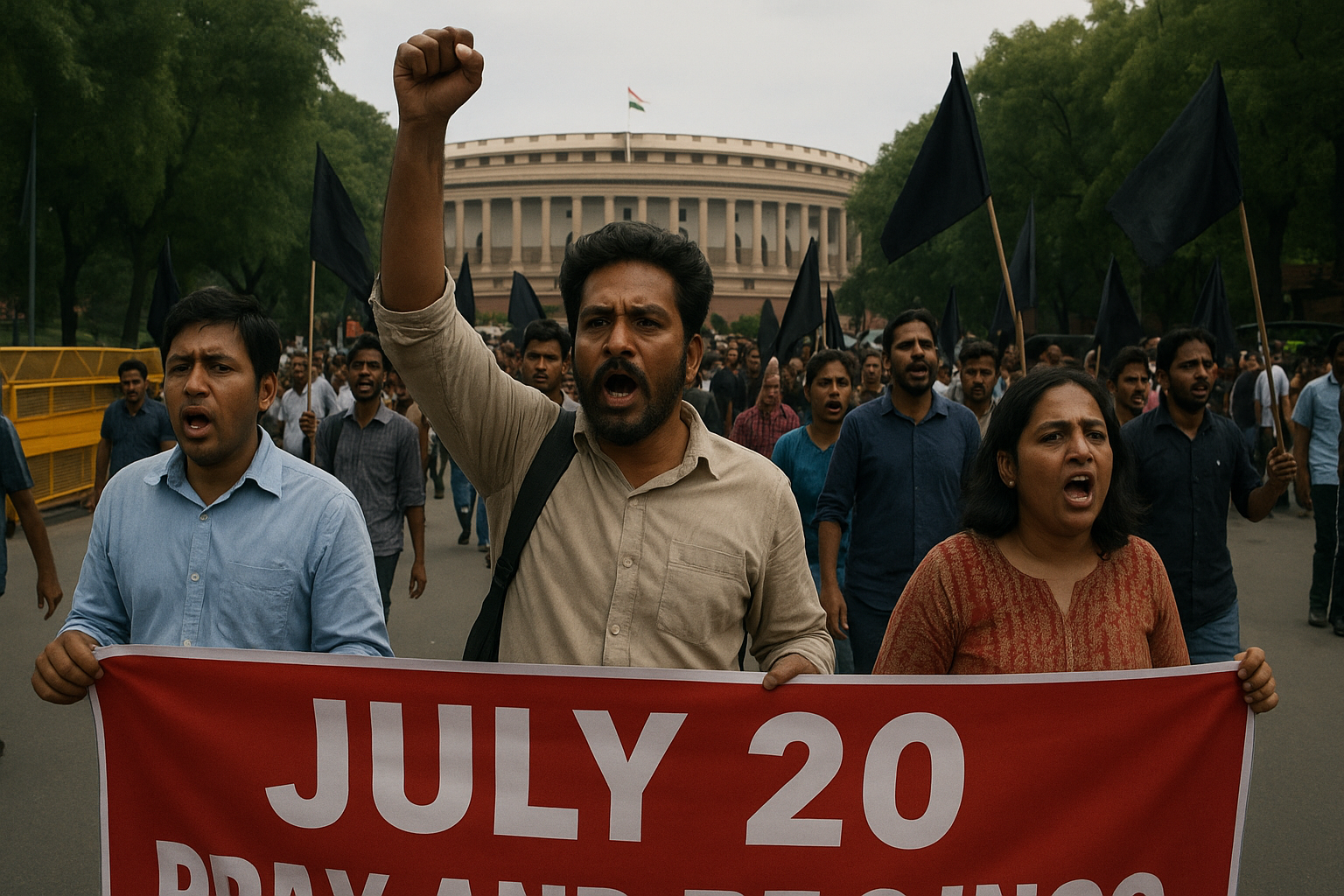
Understanding the Recent Judicial Verdict
In a recent legal development, the judiciary has officially dismissed a petition seeking an inquiry by the premier anti-terror agency into the events surrounding the legislative march that took place on July 20. The bench presiding over the matter made it abundantly clear that the mandate to transfer any ongoing inquiry to specialized federal authorities rests exclusively with the central government rather than the judicial branch. This ruling reinforces the traditional boundaries of institutional power, reiterating that courts should not dictate how executive agencies handle criminal investigations.
The Scope of Executive Authority
During the proceedings, the judges emphasized that the statutory framework governing anti-terror operations grants discretionary power solely to the administration. When petitioners approached the bench demanding a heightened level of scrutiny by the federal investigation unit, the court evaluated the constitutional separation of powers. The judicial panel concluded that compelling the central administration to hand over a specific case would constitute an overreach into executive responsibilities. Consequently, the plea was thrown out as legally untenable, preserving the established protocol for handling high-profile probes.
Background of the July 20 Legislative March
The events of July 20 drew significant public attention due to the scale of the demonstration and the subsequent unrest that unfolded near the capital’s political center. Protesters had gathered to voice various grievances, leading to clashes with law enforcement personnel. Following the incident, multiple legal challenges and demands for independent inquiries emerged from different factions. While local law enforcement initiated standard investigative procedures, civil society groups and political critics continued to push for a more rigorous federal examination, suspecting deeper conspiracies that ordinary police departments might fail to uncover.
Why the Petitioner Sought Federal Intervention
Legal representatives for the petitioner argued that the complexity and scale of the July 20 demonstration warranted the expertise of a specialized counter-terrorism unit. They contended that standard local policing lacked the jurisdictional reach and technical capabilities required to unravel potential nationwide conspiracies linked to the unrest. However, the opposing counsel maintained that local authorities were fully competent to investigate the matter and that dragging a specialized federal agency into every civil disturbance would undermine the routine functioning of state-level law enforcement.
Implications for Future Legal Challenges
This judicial stance establishes a clear precedent for how similar petitions will be treated in the future. Activists and legal experts note that courts are becoming increasingly reluctant to entertain public interest litigations that seek to bypass executive discretion in investigative matters. By maintaining a strict hands-off approach regarding which cases the federal government chooses to adopt, the judiciary protects its own role as an impartial arbiter rather than an investigative director. Moving forward, petitioners hoping to involve specialized anti-terror units must direct their appeals through administrative channels rather than the courtroom.
Conclusion
The recent court verdict serves as a vital reminder of the institutional separation between the judiciary and the executive branch in managing security investigations. By dismissing the demand for a federal anti-terror probe into the July 20 march, the bench has upheld the principle that executive authorities hold the exclusive prerogative to delegate cases to specialized units. As the local investigation continues its course, this ruling ensures that legal boundaries remain intact, preventing judicial interference in administrative decision-making.
Frequently Asked Questions
1. Why was the petition for a federal probe rejected?
The court rejected the plea because the authority to refer cases to the anti-terror agency rests exclusively with the central government, not the judiciary.
2. What was the significance of the July 20 event?
The July 20 legislative march involved large-scale demonstrations and subsequent clashes near the capital, prompting demands for a deeper and more specialized investigation.
3. Can the central government still order an inquiry into this march?
Yes, the central administration retains the discretionary power to hand over any case to federal investigators if it deems necessary, independent of court orders.
