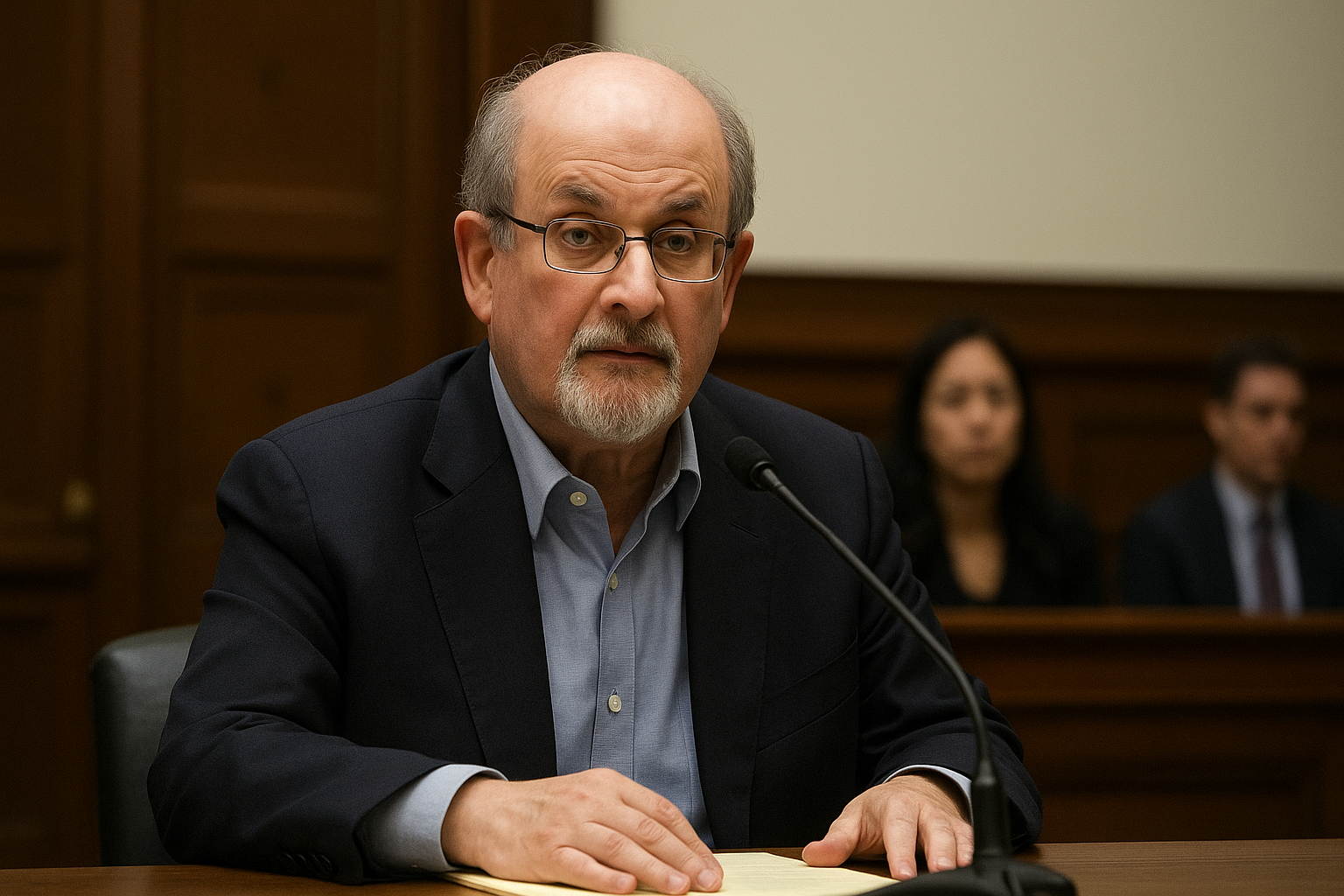
The Dramatic Courtroom Appearance
Acclaimed author Salman Rushdie delivered a compelling and emotional testimony on Thursday, addressing the federal court presiding over the terrorism trial of the individual accused of attempting to assassinate him. The harrowing incident, which took place during a literary event at a New York cultural institution in August 2022, left the literary icon with severe, life-altering injuries. Taking the witness stand, Rushdie recounted the terrifying moments leading up to the sudden onslaught, providing jurors with a first-person account of the violence that shocked the global community.
The courtroom fell into a tense silence as the novelist described the terrifying nature of the assault. For decades, the writer had lived under the shadow of a fatwa issued by Iran, yet he managed to maintain a relatively public life in the West. The 2022 attack, however, shattered that normality, bringing the long-standing threats he faced into brutal reality. Prosecutors aimed to establish that the accused acted with premeditation and ideological motivation, framing the assault not merely as a random act of street violence, but as a calculated act of terrorism designed to silence free expression permanently.
Reflecting on the 2022 Literary Event
The fateful day began like many others for the celebrated author, who was slated to deliver a lecture on the importance of safe havens for persecuted writers at the Chautauqua Institution in western New York. Rushdie remembered stepping onto the stage, greeting the audience, and feeling a sense of intellectual camaraderie. Moments later, the atmosphere shifted catastrophically.
The Sudden Onset of Violence
Without warning, a figure rushed the stage, brandishing a blade. Rushdie testified that he initially thought it was a prank or a disgruntled individual from the audience, but the rapid, vicious nature of the blows quickly disabused him of that notion. Despite desperate efforts by moderators and audience members to intervene, the assailant managed to inflict multiple deep wounds to the author’s neck, abdomen, and chest before being restrained by security and bystanders.
The physical toll was immediate and catastrophic. Rushdie spent weeks in intensive care, ultimately losing the sight in his right eye and suffering significant nerve damage in his hand. Yet, despite the immense trauma, his appearance on the stand showcased a remarkable resilience. He spoke clearly, detailing the immediate aftermath of the violence and the grueling rehabilitation process that followed the physical attack.
Broader Implications for Free Speech
Legal analysts following the federal proceedings note that the trial carries profound implications for discussions surrounding freedom of speech and the protection of public figures. By charging the assailant with terrorism-related offenses, federal prosecutors are seeking to underscore the gravity of targeting artists, intellectuals, and writers for their ideological stances or creative output.
The Defense and Prosecution Strategies
During the proceedings, the defense attempted to portray the defendant as an isolated individual grappling with severe mental health issues, arguing against the terrorism enhancements sought by the government. However, the prosecution countered with digital evidence, social media analysis, and witness testimonies suggesting that the accused was deeply radicalized and specifically targeted Rushdie in alignment with longstanding extremist grievances.
As the trial continues, the global literary community watches closely. Rushdie’s willingness to face his alleged attacker in a court of law is seen by many supporters as a powerful statement of defiance against censorship and intimidation. The author has continually emphasized that fear cannot be allowed to dictate the boundaries of creative and intellectual discourse.
Conclusion
The testimony of Salman Rushdie in the federal trial of his alleged attacker marks a pivotal chapter in a case that reverberated worldwide. By recounting the terrifying details of the 2022 assault, the renowned author not only contributed crucial evidence to the judicial process but also reaffirmed his unwavering commitment to the principles of free expression. As the jury weighs the evidence of terrorism and premeditation, the proceedings stand as a stark reminder of the enduring vulnerabilities faced by writers and thinkers, as well as the indomitable spirit required to counter acts of ideological violence.
Frequently Asked Questions
When did the attack on Salman Rushdie occur?
The violent incident took place in August 2022 while the author was preparing to deliver a lecture at the Chautauqua Institution in western New York.
What specific injuries did Salman Rushdie sustain?
Rushdie suffered multiple deep stab wounds to his neck, chest, and abdomen, which resulted in the loss of sight in his right eye and severe nerve damage to one of his hands.
Why is this being tried as a federal terrorism case?
Federal prosecutors are pursuing terrorism charges because evidence suggests the assault was premeditated and ideologically motivated, aimed at punishing the author for his writings and suppressing free speech.
